ICF vs Hebel vs Panel W: The REAL Comparison for Mexico (2026)

In Mexico, three “modern” wall systems compete to replace traditional block:
🟩 ICF (Insulated Concrete Forms – monolithic reinforced concrete)
🟧 Hebel (AAC – autoclaved aerated concrete)
🟦 Panel W (EPS + steel mesh + structural mortar)

Izquierda arriba y abajo: ICF | Derecha arriba: Hebel | Derecha abajo: Panel W
All promise speed, comfort, insulation, and energy savings. But they are NOT equivalent.
This article presents the true comparison, based on:
✔ Official Mexican technical sheets
✔ Real on-site performance
✔ Verified technical behavior
✔ No invented numbers
🟧 Hebel — What it IS and what it IS NOT
Hebel is lightweight AAC.Thermally decent.Structurally limited.
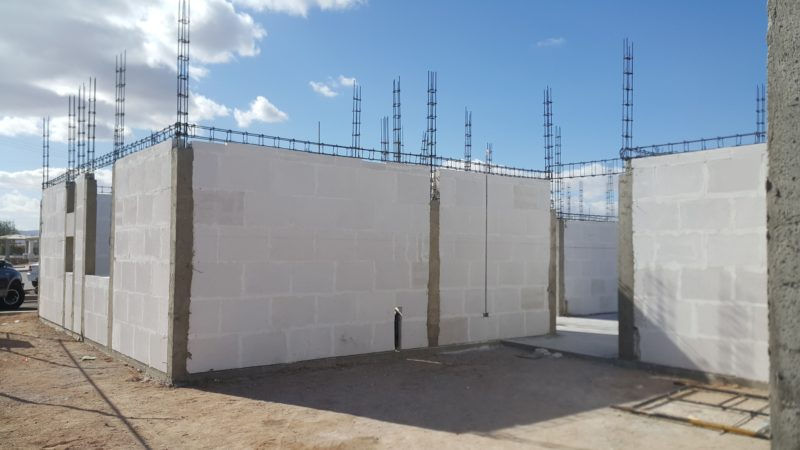
❌ Hebel is NOT load-bearing
It requires:
vertical concrete columns
horizontal beams
confinement
reinforced U-blocks
structural frames
It is not a stand-alone wall system.
❌ Does not support heavy loads
Water tanks, solar heaters, pergolas, or concentrated loads must NOT sit directly on Hebel.
❌ Absorbs moisture
Requires mandatory exterior coatings to avoid deterioration.
❌ Slower than people expect
Typical real performance: ~10 m²/day per crew.
✔ Thermally decent
But still far from ICF’s energy performance.
🟦 Panel W — What it IS and what it IS NOT
Panel W = EPS + mesh + mortar.Its strength comes entirely from the plaster layer.

❌ Not structural (Diving walls 3” and 4”)
Explicit in the technical sheets:
“Not for structural use.”
❌ Structural version depends 100% on mortar
If the plaster cracks → the wall weakens.
❌ Very low thermal insulation
Example: R 3.19 (Panel 3”)ICF = R 22–40
❌ Height and seismic limitations
PU-2000 → max 2 floors
PU-4000 → max 4 floors
Wall panels → moderate seismic zones only
Mexico is NOT a moderate seismic country.
❌ Complicated installations
Electrical = cutting mesh
Plumbing = breaking mortar
Leads to cracking and rework
🟩 ICF — Why it performs differently
ICF combines:
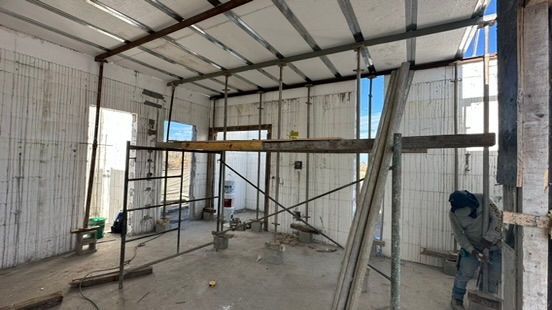
✔ structure
✔ permanent formwork
✔ thermal insulation
✔ acoustic insulation
✔ airtightness
✔ speed
✔ durability
✔ seismic resistance
✔ hurricane resistance
✔ <3% waste
And...
ICF IS a true structural wall system
A monolithic concrete core carries the loads, NOT the coatings.
Comparison Table — ICF vs Hebel vs Panel W
Category | ICF | Hebel | Panel W |
Structural capacity | ⭐ High | ❌ Needs columns & beams | ❌ Depends on plaster |
Heavy loads | ⭐ Yes | ❌ No | ❌ No |
Seismic resistance | ⭐ Excellent | ✔ Good when confined | ❌ For moderate zones only |
Thermal insulation | ⭐ Excellent | Medium-High | Low |
Acoustic performance | ⭐ Excellent | Medium | Low |
Construction speed | ⭐ Fast | Medium | Slow |
Moisture resistance | ⭐ High | ❌ Absorbs | Medium |
Durability | ⭐ High | Medium | Medium-Low |
Maintenance | Low | Medium | High |
Long-term cost | ⭐ Low | Medium | High |
3 Issues No One Mentions About Hebel and Panel W
❌ 1. They do NOT combine structure + insulation in one system
Only ICF does.
❌ 2. They do NOT deliver acoustic comfort
ICF far outperforms both.
❌ 3. They break or degrade faster in extreme climates
ICF is designed for hurricanes, heat, cold, and earthquakes.
🟩 FINAL CONCLUSION
Hebel → good thermal filler wall, not structural.
Panel W → good for light partitions, not comparable to reinforced concrete.
ICF → the only system that delivers:
✔ structure
✔ comfort
✔ thermal efficiency
✔ acoustic performance
✔ durability
✔ low maintenance
✔ real strength
✔ lower energy bills


Comments