“Screen Grid vs Solid Wall: Which ICF Insulates Better? The Real Thermal Performance Behind ICF México Systems”

ICF (Insulating Concrete Forms) is known worldwide for delivering energy efficiency, comfort, and exceptional structural performance. In Mexico, two ICF wall configurations dominate the market:
Screen Grid ICF (post & beam) — ICF-15 and ICF-20
Solid Wall ICF (monolithic core) — StrongWall
Both deliver outstanding thermal insulation, but each behaves differently due to concrete distribution and thermal mass.
Let’s break down how each system insulates and which one is best for every type of project.
1. How Thermal Insulation Works in ICF
In ICF construction, the majority of the insulation comes from EPS foam—not from the concrete.Concrete contributes structural performance and thermal mass, while EPS:
Reduces heat transfer
Eliminates thermal bridging
Maintains stable indoor temperatures
Reduces HVAC energy consumption by up to 50%
This means both systems offer elite insulation, though their thermal behavior varies by mass and continuity.
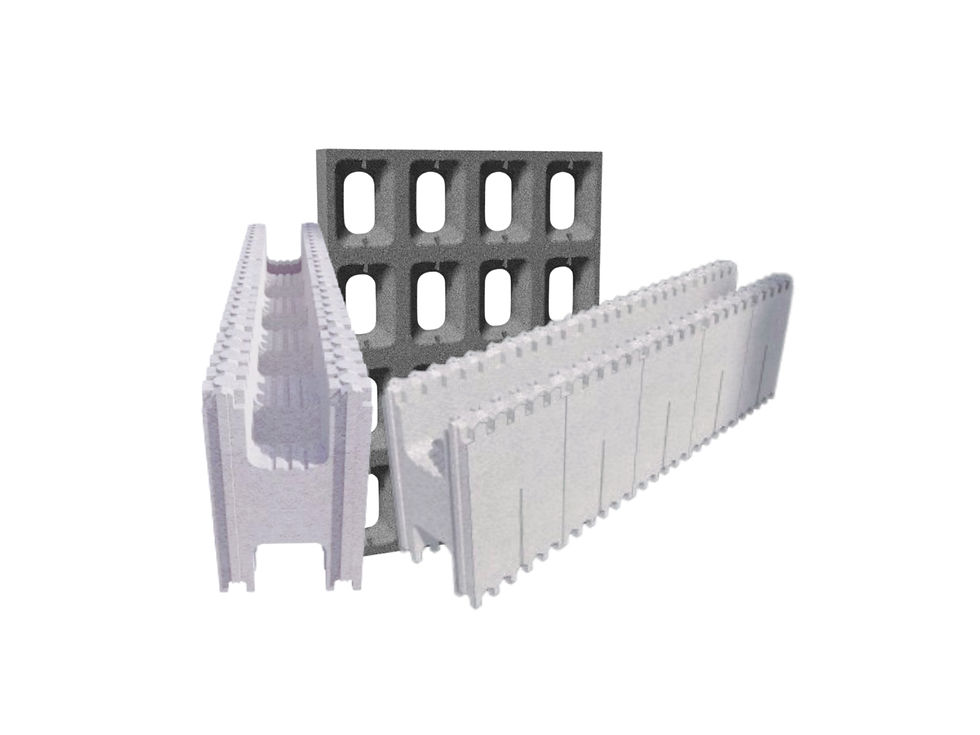
2. Screen Grid ICF (ICF-15 & ICF-20): Maximum Insulation with Lower Thermal Mass
Screen Grid ICF uses:
Reinforced concrete cores (vertical + horizontal)
Large sections of uninterrupted EPS
Complete thermal bridge elimination
R-Values (Mexico):
ICF-15 → R-17+
ICF-20 → R-26+
Thermal Advantages
High percentage of EPS → extremely low heat transfer
No continuous concrete path
Better performance in hot climates
Lower conduction compared to solid systems
Perfect for warm regions and residential projects.

3. Solid Wall ICF: Maximum Thermal Mass + Continuous Insulation
Solid Wall ICF features:
A 100% continuous monolithic concrete core
EPS layers on both sides ensuring uninterrupted insulation
R-Values (by core thickness):
4” → R-22
5.5” → R-24
7.5” → R-26
Thermal Advantages
Extremely high thermal mass
Superior thermal lag (delay in heat flow)
Exceptional interior stability
Best for buildings with internal heat loads
Ideal for hotels, offices, warehouses, and mixed-climate regions.
4. Side-by-Side Comparison
Feature | Screen Grid (ICF-15 / ICF-20) | Solid Wall (StrongWall) |
R-Value | R-17+ to R-26+ | R-22 to R-26 |
Thermal Mass | Medium | Very high |
Thermal Bridges | Zero | Zero |
Thermal Lag | Excellent | Superior |
Hot Climate Comfort | 🔥 Best | Very high |
Mixed or Cold Nights | High | 🔥 Best |
Cost per m² | Lower | Higher |
Typical Use | Homes & mid-rise buildings | Hotels, hospitals, industrial |
5. Which One Should You Choose?
Best cost-to-performance ratio → Screen Grid
Highest insulation for the investment.
Best thermal stability + mass → Solid Wall
Superior for demanding commercial environments.
Conclusion
Both systems deliver exceptional energy efficiency far beyond traditional masonry.Your choice depends on:
Climate
Building use
Desired thermal mass
Budget
Operational goals
Screen Grid and Solid Wall ICF from ICF México are both world-class solutions for modern, efficient, high-performance construction.


Comments